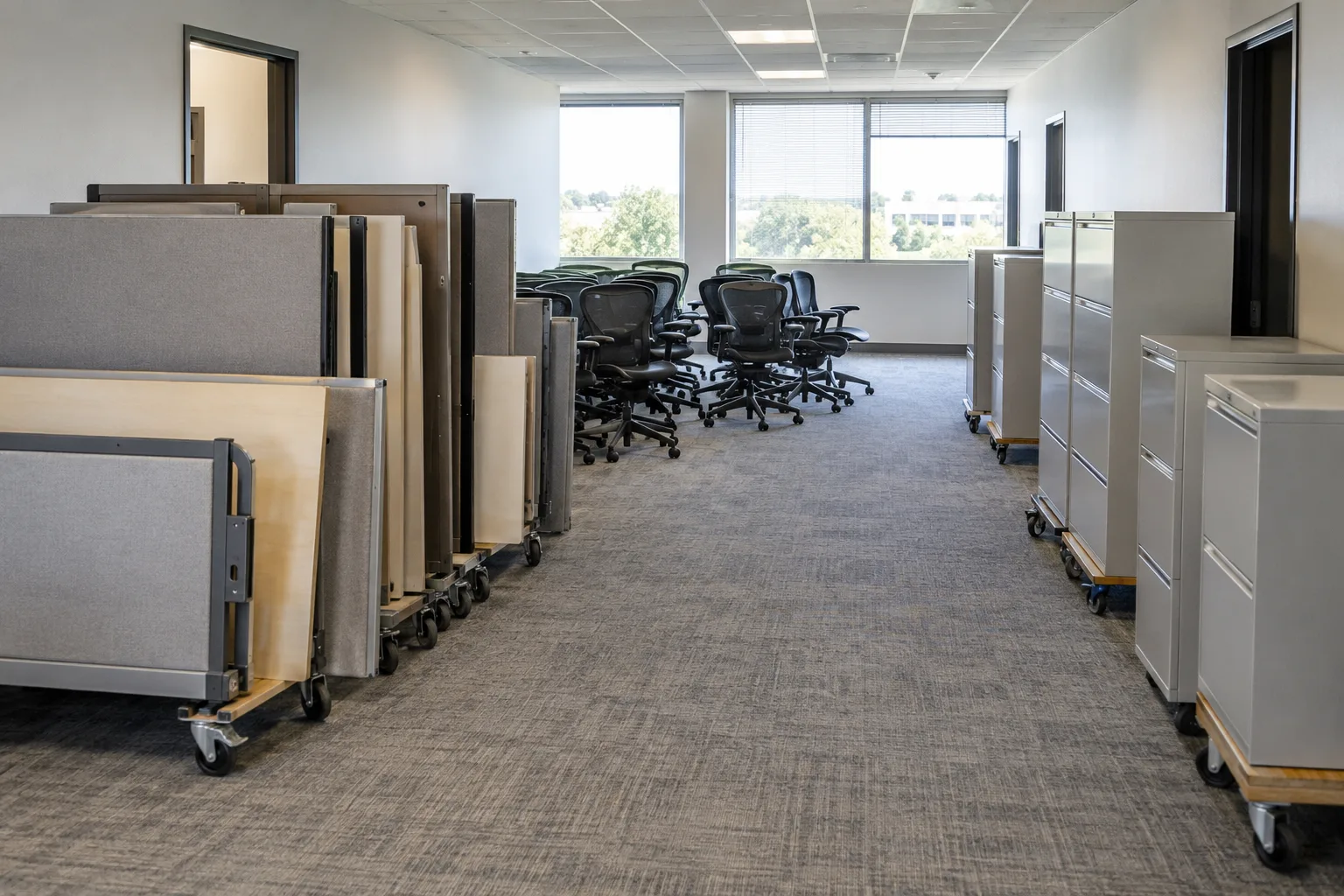
Count by furniture type, separate electronics and records, and document building access before choosing a pickup window. The goal is to give the removal team enough information to plan the load and the route without asking you to guess at pricing or handling.
1. Count furniture by type
List desks, work tables, task chairs, conference chairs, file cabinets, shelves, reception pieces, and dismantled panels separately. Note oversized conference tables or dense lateral files.
2. Remove records and electronics
Empty cabinets and desks. Disconnect computers, monitors, phones, and network equipment that are not part of the furniture scope. Protect confidential records through the organization’s normal process.
3. Map loading access
Confirm elevator reservations, loading-dock hours, door credentials, parking restrictions, and the distance from the suite to the vehicle. Identify who can provide access on pickup day.
4. Mark what stays
Use a clear room plan or consistent labels for keep, move elsewhere, and remove. Avoid several competing label systems, and assign one on-site person to answer scope questions.
Quick handoff checklist
| Detail | What to send |
|---|---|
| Furniture | Full photos, count, dimensions, material, and condition |
| Route | Floor, stairs, elevator, narrow turns, and door widths |
| Loading | Parking location, carry distance, gate, dock, or building rules |
| Timing | Preferred dates and any hard access window |
For the service scope, see Office Furniture Removal. When your photos and route details are ready, use the estimate checklist.