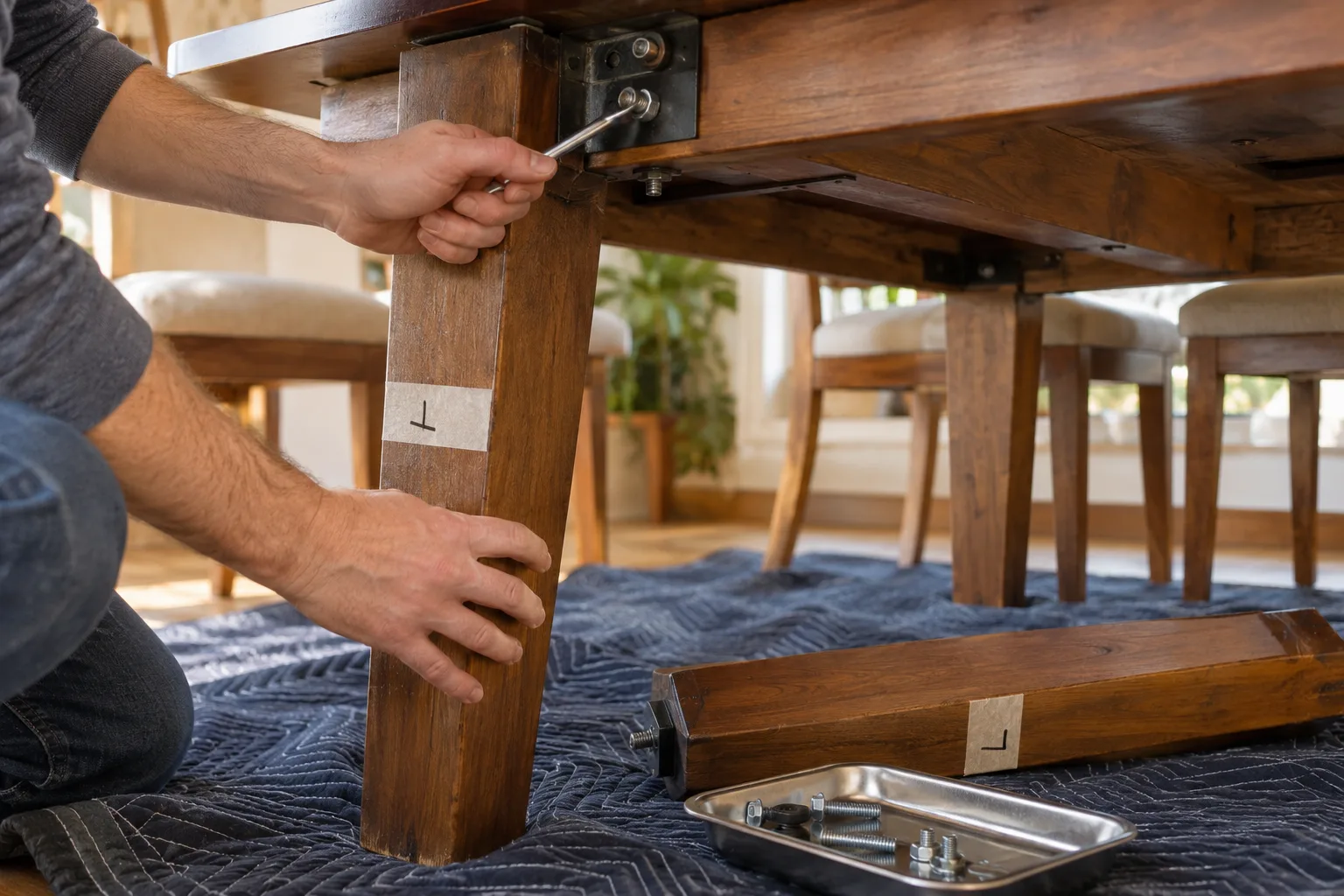
The top material, removable legs, route width, and floor protection matter more than the table’s style. The goal is to give the removal team enough information to plan the load and the route without asking you to guess at pricing or handling.
1. Identify the top material
Solid wood, stone, glass, veneer, and composite tops carry differently. Note separate leaves, loose glass, pedestal bases, and extensions. Avoid guessing the weight from appearance alone.
2. Check how the base separates
Photograph bolts, brackets, pedestal plates, and leg joints from underneath when safely accessible. A clear photo can show whether ordinary disassembly is likely or a closer assessment is needed.
3. Protect the path
Clear chairs, rugs, wall decor near tight corners, and anything fragile along the route. Mention delicate floors, narrow doorways, steps, or a long outdoor carry.
4. Count companion pieces
Include chairs, benches, leaves, hutches, and sideboards in the same inventory. Separating the count by item type helps the estimate reflect the whole dining set.
Quick handoff checklist
| Detail | What to send |
|---|---|
| Furniture | Full photos, count, dimensions, material, and condition |
| Route | Floor, stairs, elevator, narrow turns, and door widths |
| Loading | Parking location, carry distance, gate, dock, or building rules |
| Timing | Preferred dates and any hard access window |
For the service scope, see Dining Table Removal. When your photos and route details are ready, use the estimate checklist.